 by Bangla Krishi Khamar
Freshwater Prawn Culture in India
A complete farmer’s guide to Freshwater Prawn Culture in India (Scampi / मीठे पानी का झींगा) using Macrobrachium rosenbergii — covering pond preparation, seed nursing, stocking, feeding, health care, and harvesting – Prepared by Bangla Krishi Khamar – India’s trusted Scampi Seed Supplier
Introduction — What is Freshwater Prawn (Scampi)?
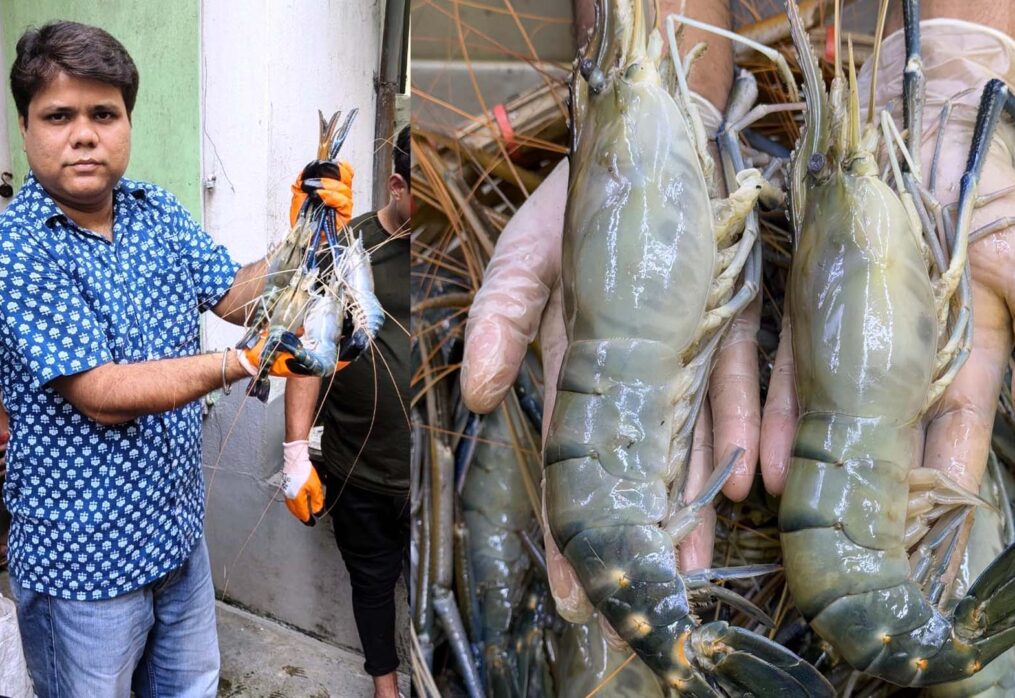
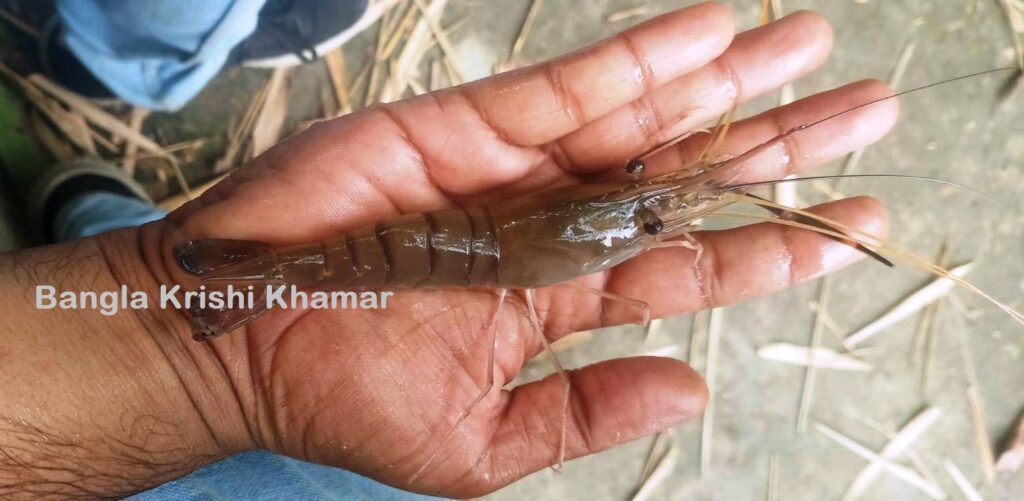
Scampi (locally called मीठे पानी का झींगा) is a delicious freshwater prawn scientifically known as Macrobrachium rosenbergii, also called the Giant Freshwater Prawn. These invertebrates are cold-blooded and protected by a shell, growing through repeated moulting (shedding of the shell).
They are omnivorous, feeding on decomposing organic matter, diatoms, copepods, and small crustaceans. Males grow faster and larger than females. However, cannibalism may occur during moulting if food or shelter is insufficient.
Why Freshwater Prawn Culture in India is Profitable
Freshwater prawn (Scampi) Culture is rapidly growing across India due to its high market value and export potential. Some major advantages include:
- High growth rate and strong profitability
- Low feed cost compared to income
- Excellent market demand (domestic & export)
- Can be grown with carps or even in paddy fields
- Suitable for freshwater and low-salinity water (<5 ppt)
- Low disease incidence and medicine cost
- Availability of hatchery and natural seed
- Easy to manage with locally available feed ingredients
Farming Systems for Freshwater Prawn (Scampi) Culture in India
Two main culture systems for Scampi – Freshwater Prawn Culture
- Monoculture (single-species)
- Typical stocking per 1 Decimal: 100–110 scampi juveniles.
- With improved/clean systems stocking can be increased to 200–300 per 1 Decimal.
- Expected production per acre: 400–500 kg scampi.
- Polyculture (mixed culture with carps)
- Typical stocking per 1 Decimal: 70–80 scampi juveniles + 3–4 carp fingerlings.
- Recommended carp size at stocking: ~400–500 g (so they reach ~3–3.5 kg at harvest).
- Avoid species that prey on prawns or low-value carps that depress economics.
- Expected production per acre: scampi 200–300 kg; carps 2000–2500 kg.
Seed (PL/Larvae) Availability and Season
- Natural collection from rivers and estuaries is common; Bangla Krishi Khamar collects, grades and supplies quality Scampi Seed all over India
- First PL appears around March–April, and natural PL is available until about September–October
- Seed from natural sources generally has good quality.
Bangla Krishi Khamar, based in West Bengal, collects, grades, and supplies premium Scampi seed all over India, ensuring strong survival rates and fast growth performance.
Post-Larva (PL) Nursing Tips for Scampi Culture in India
- During first 20–25 days after PL release, use powdered feed. Start with 10 g powdered feed per 1,000 PL and gradually increase.
- Transition to small pellet feeds later.
- Feed protein: 30–40% protein during early stages; for larger prawns use 28–30% protein feeds.
- Typical PL survival: 70–80% under good conditions; survival can drop in poor conditions.
- Use sinking feeds (prawns are bottom-feeders). Avoid overfeeding — uneaten feed degrades water quality.
Nursery Pond Design and Management for Freshwater Prawn Farming in India
- Use 10–40% of the total culture area for nursery ponds. Smaller nursery ponds allow quicker turnaround of the main culture pond (other fish can be grown there for extra income).
- Pond bottom with minimal sludge is best. Sandy loam or loamy soil ponds with 3.5–4 ft depth are suitable for PL nursing.
- Protect PL from overheating: provide shaded shelter — insert 2–3 dry coconut / palm / date fronds (cut branches) at 45° angle, submerged, to give shelter (do not use raw living branches).
- Pond dikes must be strong and well-maintained.
- Surround nursery pond with netting to prevent entry of snakes, frogs, crabs and birds. Also frequently stretch ropes or tapes above the pond to deter predators.
Pond Preparation for Culture of Freshwater Prawn in India
- Prepare ponds similar to other aquaculture ponds. Remove excess sludge — too much mud harms culture.
- Apply 1–2 kg lime per 1 Decimal during pond preparation.
- Keep pond surrounds clean to allow good light and airflow.
- At low water level, apply rotenone (retention) to remove predatory fish and pests if necessary.
- For stocking, maintain water depth of 4–5 ft in grow-out ponds. Too deep water causes low oxygen; too shallow causes overheating.
Stocking & Feed (Grow-out)
- Nursery-reared juveniles of 2.5–3 inch (locally called “chotka”) are ready for stocking.
- At chotka size you can prepare feeds mixing FIT feed plus soybean meal, corn, dhal waste, flattened rice, boiled wheat, etc., to make economical feeds.
- Monitor feeding closely — overfeeding wastes feed and degrades water quality.
- Keep dissolved oxygen (DO) at or above 5 mg/L. Scampi are oxygen-sensitive — test DO at deep night/early morning.
- If DO drops or pond embankments are low, prawns may try to leave the pond.
- If many prawns die suddenly, consider stocking density and feed rates; reduce feed and check water quality.
Health, Shelter & Behavioural Management
- Scampi are territorial and sometimes aggressive. After moulting they are weak and vulnerable; cannibalism increases if food or shelter is scarce.
- Every 15 days check prawns by netting; remove/trim long legs or broken appendages (this reduces attacks and cannibalism). Leg trimming reduces energy spent on limb movement (leg movement uses ~15–20% of energy) and lowers fights.
- Add zeolite at 150–200 g per 1 Decimal every 20 days for water quality improvement. Add salt at 250 g per 100 Decimal monthly as a prophylactic measure (as recommended in local practice).
- Secure pond perimeter with netting to prevent predators (snakes, frogs, herons, crabs) from entering.
Water Quality Monitoring & Critical Limits for Freshwater Prawn Farming in India
- Maintain Dissolved Oxygen ≥ 5 mg/L. Monitor DO frequently (especially at night/early morning).
- Maintain stable temperature and avoid rapid fluctuations. Avoid water heating in direct sun — shade nursery areas.
- Avoid accumulation of uneaten feed and organic waste — clean and manage feeding accordingly.
Harvesting & Marketing
- Harvest time depends on target size and market demand. In monoculture you may expect heavier average sizes and moderate total yield; in polyculture schedule harvests to match carp size and market cycle.
- Scampi fetch high market prices; check local and export market channels. Bangla Krishi Khamar collects, grades and sells quality seed and can assist with marketing info and logistics.
Conclusion
Freshwater Prawn Culture in India offers farmers a profitable and sustainable aquaculture opportunity. With proper pond management, feeding, and quality seed from trusted suppliers like Bangla Krishi Khamar, farmers can achieve high productivity and consistent income.